
Waning Deterrence: China and Taiwan
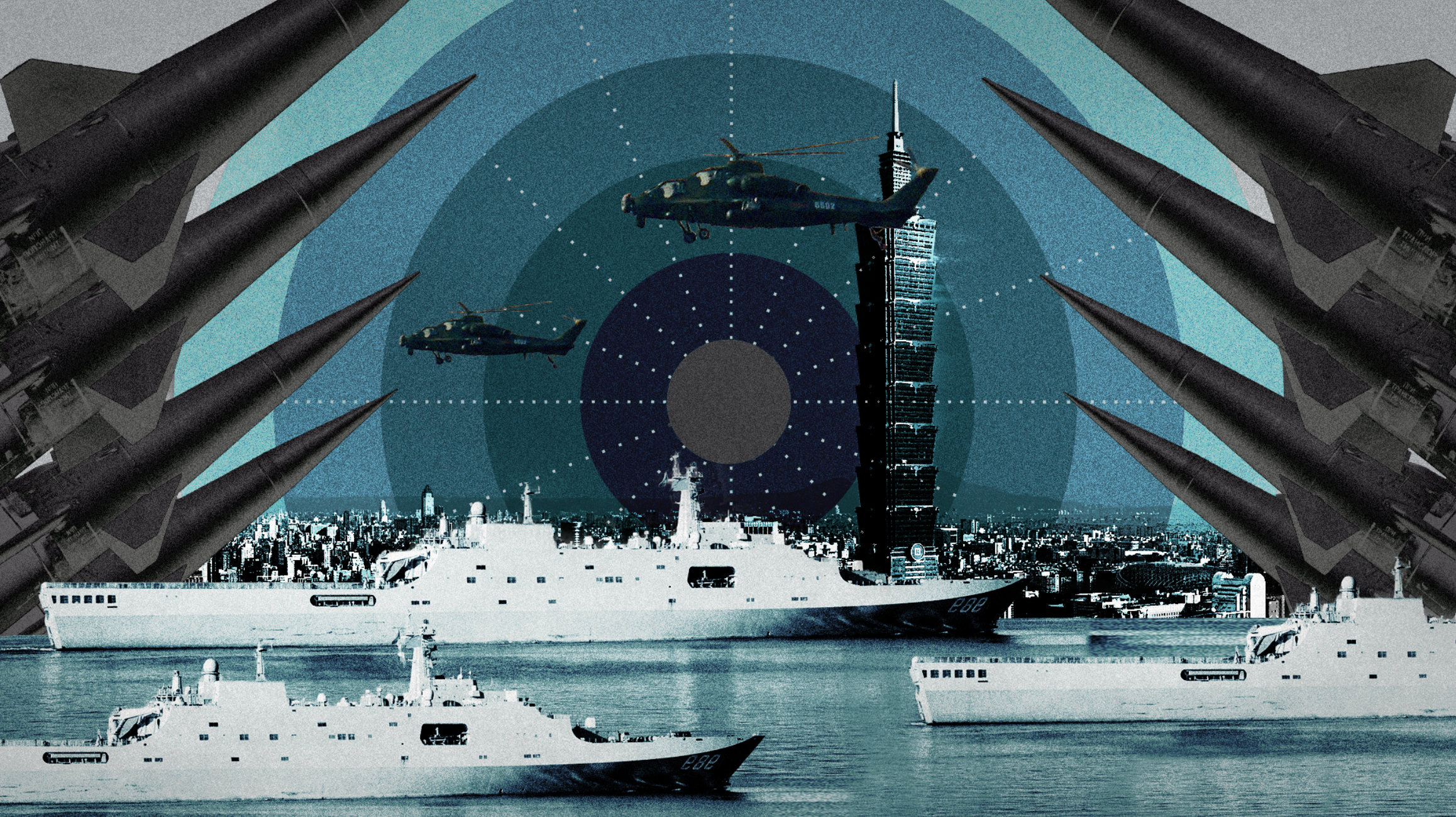
Taiwan is the single most consequential foreign policy issue that the West faces today. The spectre of a second Cold War, which threatens to be more challenging than the last, hangs over an increasingly fragmented and uncertain global order. Indeed, when George Orwell first coined the term 'Cold War', foretelling the onset of 'an epoch as horribly stable as the slave empires of antiquity', he spoke of China as 'the third of three super-states' whose threat was 'still potential rather than actual'. The China of today already a more menacing adversary than the USSR had been during Cold War I. Whereas the latter had, for most of the Cold War, been little more than a giant gas station with nuclear weapons, the Chinese are propelled by a more promising economic tailwind and have a clear demographic edge over the United States.
The USSR's peak national output as a share of the US' GNP, which had been supported primarily by a significant petrochemical windfall during the 1970's, had only been 57%. That is, for most of its existence, the Soviet Union had been over twice as poor as the United States. Today, China's nominal GDP of $20.65 trillion stands at 65% of the US' $31.82 trillion. When Purchasing Power Parity (a metric that adjusts the nominal GDP figure to account for cost-of-living disparities, reflecting the value of goods that that the nation can actually afford) is considered, China has already far outpaced its trans-Pacific counterpart and stands at 137% of US PPP GDP. Even in the face of overt overtures by President Trump to peacefully ease the tensions between the two nations, the CCP has maintained its strategic commitment to completing 'reunification' by 2050.
Taiwan is the most significant potential flashpoint that could turn this new Cold War kinetic. Rather than discussing the reasons for the strategic significance of this island, which I shall do in a subsequent article on the topic, I want to lay out why China may choose to invade the island in the next decade and what the West needs to do to deter such an escalation. This will be the first of three articles on the subject. The scope of the respective pieces will be as follows:
Article 1 (this article): Laying out the erosion of erstwhile external constraints and internal restraints on Chinese aggression.
Article 2: Why it may no longer be in China’s interests to defer action over Taiwan in the next few years.
Article 3: What steps the West (and, in particular, the United States) must take to re-establish strong deterrence and avoid global conflict.
Waning Deterrence
Since 1949, Taiwan and the United States have progressively lost most their levers of deterrence against the PRC, despite recently deepening ties with each other. For over 50 years, the island state had wielded a patchwork of military and economic constraints on hostile Chinese expansionism, which have overlapped with intermittent internal incentives for restraint within the Chinese Communist Party itself.
Roughly, these levers of deterrence against CCP can be grouped as follows:
US military superiority
Taiwanese air superiority
The strength of US-Taiwanese defence ties
The Silicon Shield
The internal factors pushing the PRC towards restraint may similarly be categorised:
Positive China-Taiwan Trade Expectations
Chinese reputational concern
Positive China-US Trade Expectations
Although nontrivial, these regulators of Chinese aggression are far less significant than external deterrents.
The erosion of historic constraints on Chinese aggression.
1. The strength of US-Taiwanese defence ties
Until the outbreak of the Korean War in 1950, the US had been content with permitting a PRC force to stage a takeover of the Republic of China (ROC). During and after this war, however, when it had become evident that the world had entered a Cold War, the US sought to protect Taiwan as part of its policy of Communist containment. A 1954 Mutual Defense Treaty represented an Eisenhower-led institutionalisation of US support for Taiwan, serving as the strategic cornerstone that forestalled multiple Chinese attempts to annex offshore territories during the 1950s.
This strong, contractual commitment to militarily intervene in behalf of Taiwan in the case of a ‘general’ assault on the island would form the basis of the US strategy of ‘hard’ deterrence until the late 1970’s. Since the era of rapprochement between the US and China, which was driven by Nixon’s wish to exploit the divisions that had arisen between the latter nation and the USSR, the USA has transitioned to a policy of deliberate strategic ambiguity over Taiwan.
In 1979, following its transition of diplomatic recognition to the People's Republic of China, the United States unilaterally terminated its formal defense pact, thereby dismantling the explicit legal framework that had hitherto ensured Taiwan’s security. This was replaced with the Taiwan Relations Act (TRA), which committed the U.S. to providing ‘arms of a defensive character’ and maintaining the capacity of the island to resist coercion which could jeopardise its security. The US remained capable and operationally ready to defend Taiwan if necessary, but did not explicitly commit to doing so. This strategic ambiguity acted as a weaker, yet still credible, deterrent.
This was a move intended to reconcile the dual aims of the US government to maintain Western control over Taiwan, whilst whilst stabilising the international order through more amicable engagement with the PRC. The US issued ‘six assurances’ to the Taiwanese government in 1982 which made clear that the US had not shifted its stance on Taiwan’s sovereignty, would remain committed to continued arms sales and adherence to the TRA, and would not pressure the ROC into negotiations over its sovereignty. On the other hand, the US and China published three joint communiques between 1972 and 1982 affirming the belief that Taiwan was part of China; that the PRC was the ‘sole legal government’ thereof; and that the US would seek to gradually reduce arms sales to Taiwan. These messages were deliberately conflicting, clouding Beijing’s calculus and leaving the PRC unable to predict the threshold of American intervention. This deterrent was decisively tested in 1996 as the Chinese conducted provocative missile tests near Taiwan and were met with an overwhelming, carrier-led show of force.
Since President Trump’s first term in office, there has been a renewed strategic clarity in US policy over Taiwan. The rise of China as an economic and military player threatens to thrust the world into a second, more terrifyingly difficult Cold War. Against this looming backdrop, Taiwan’s utility for the United States had grown in recent years. Maintaining Taiwan’s autonomy is the prerequisite for preserving the integrity of the First Island Chain, which serves as the primary maritime cordon preventing an uninhibited Chinese naval breakout into the deep Pacific. Its singular chipmaking capacity is indispensable for the functioning of US military hardware and industry.
2. Taiwanese air superiority
For nearly four decades, the Taiwanese air force held undisputed command of the skies in over the Taiwan strait, despite being outnumbered. It operated modern US hardware (F-86 Sabres, F-104 Starfighters, and later F-5 Tigers) whilst the PRC chiefly flew reverse-engineered Soviet MiG jets which were often a generation behind. This superiority had been powerfully demonstrated during the second Taiwanese crisis in 1958, with the Taiwanese air force achieving a 14:1 kill ratio against PRC MiG’s.
However, since the 1990’s, China has invested heavily in military modernisation and have deliberately built a force geared towards amphibious assault on the ROC, whereas Taiwan has struggled to acquire new military hardware in the face of Chinese pressure on arms manufacturers. The PLAAF were able to claw back parity in this arena in two ways. Firstly, they began importing advanced Russian aircraft, such as Su-27’s and Su-30’s, which could match and even exceed the performance of their Taiwanese counterparts. Secondly, they prudently shifted their strategy to ‘A2/AD’ (Anti-Access/Area Denial), which prioritised the development of thousands of Short Range Ballistic Missiles that can swarm and paralyse the Taiwanese air force in the opening stages of a war.
Since about 2010, most military analysts have argued that Taiwan has conclusively lost its air superiority, and is now fighting for ‘air denial’ capabilities. Mainland China has operationalised the J-20 Fifth-Generation stealth fighter, a state-of-the-air jet with radar-evading properties that the Taiwanese struggle to match. This has prompted the Taiwanese transition to heavy investment in Ground Based Air Defence systems to make an air campaign over the island a prohibitively costly endeavour for the PRC. This new emphasis on ‘air denial’ has been described as a ‘porcupine strategy’.
Nevertheless, Taiwanese power in the sky is waning as China - now a rising superpower - rapidly builds its missile technology and fighter force.
3. US military superiority
Between 1950 and the late 1990’s, the United States enjoyed clear military hegemony over China, and wielded overwhelming force during the two crises of the 1950’s, as well as in 1996. Prior to the PRC’s development of a nuclear weapon in 1964, the US could - and did - freely threaten the Chinese with nuclear retaliation in the case of a major confrontation over its neighbour. Even post-1964, its nascent arsenal lacked the delivery systems necessary to mount a credible challenge to American strategic dominance, and did not develop a nuclear second-strike capability until the 1990’s. To this day, US nuclear forces outclass those of the Chinese, yet both sides are acutely aware of the risk of Mutually Assured Destruction in the event of a confrontation.
Since the humiliation of 1996, the Chinese embarked upon a programme of technologically asymmetric buildup of its conventional armed forces. Under their ‘Assassin’s face’ strategy, they focused on developing specific, low-cost technologies to kill high-cost US assets, investing heavily in ballistic missiles and a modern, quiet submarine fleet that would lay in wait for US carriers in the shallow littoral waters around Taiwan.
Today, the Chinese have become a formidable threat to the United States and would have several key advantages in a confrontation over Taiwan.
The foremost advantage they would command lies in their proximity to the island nation. The USA is an ocean away from Taiwan, and would take weeks to concentrate naval forces which are currently scattered across the globe to be able to repulse a Chinese invasion. Conversely, the PRC possesses a significant first-mover advantage, enabling it to potentially saturate Taiwan’s defences and achieve a fait accompli before the USA can mobilise a decisive response.
A second key Chinese strength is the robustness of its shipbuilding and manufacturing base. Palmer Luckey, the eccentric billionaire founder of Anduril technologies, has on numerous occasions emphasised that the Chinese shipbuilding capacity now exceeds that of the US by over two orders of magnitude. Its exceptional manufacturing capabilities, coupled with the fact that many Chinese factories have been designed to be easily adaptable to the production of military hardware, systems, and armaments, means that the USA could be on the back foot in the event of a protracted conflict.
It is now an open secret that the US navy loses the majority of the war games against China that it simulates, exhausting its stockpile of high-precision missiles within the first ten days of war. A potential loss of access to Taiwanese microchip technology would compound the US’ current maladaptation to mass industrial and military production.
With the waning ability of the United States to defeat China in a confrontation over Taiwan, and a clear aversion within Western society to boots-on-the-ground military engagement, even despite a greater ostensible commitment to the island’s defence, Taiwan is losing its ability to effectively deter the Chinese. Doubtless, the costs of such an invasion may still be too high for the Politburo to stomach, but the CCP may view a limited move (such as a quarantine or blockade) as an attractive option in the near term.
The US strategy currently seems like one of speaking loudly and carrying a small stick. But the Chinese will not be deterred by strong words. They can only be deterred by military and economic leverage.
4. The Silicon Shield
Since the turn of the century, Taiwan’s so-called Silicon Shield has been an important deterrent of Chinese military intervention in two respects.
The first of these is the risk of economic destruction that such a conflict conflict would carry for the Chinese. China imports roughly one third of its semiconductors from the Taiwanese giant TSMC. In the event of an invasion or blockade, these critical factories (or ‘fabs’) would likely be destroyed or ‘soft-killed’ (shut down), crippling the Chinese economy and military production, which (at least in part) relies on the flow of these high-tech chips.
The second way in which the Silicon Shield has acted as a deterrent over the last two decades is through the importance of Taiwanese semiconductors to the Americans. The reality is that Taiwanese factories are responsible for approximately 90% of their production. Global dependence on these chips means that a conflict would trigger a global depression - a depression which Bloomberg estimates would cost the global economy upwards of $5 trillion. Like the Chinese, US forces rely on the ROC’s TSMC fabs, and as such have strong economic and strategic incentives to aid in Taiwan’s defence. It is this tangible financial incentive that has acted as a source of worry on the part of the Chinese that a move on Taiwan could lead to a significant US-China confrontation.
The strength of this deterrent is beginning to decline, as both global superpowers have begun to break their dependence on the shield. The US has moved to onshore the manufacturing of these microchips through programmes such as the Biden-era CHIPS Act, which has pumped billions into TSMC’s Arizona plant. Reduced economic reliance on Taiwan lowers the likelihood that the US will resolve to defend the island from a Chinese invasion, and inadvertently broadcasts a message of preemptive capitulation, signalling to Beijing that the U.S. is managing the decline of its Pacific hegemony rather than reinforcing its commitment to its defense.
China has similarly devoted billions of dollars to building out its own semiconductor manufacturing capability. Although they trail Taiwan in the production of the most advanced chips, China has begun to increase its self-sufficiency in even this field, having recently achieved breakthroughs in the manufacture of 5nm and 7nm chips using older equipment. A reduced economic fallout as a consequence of aggression over its neighbour erodes the effectiveness of this deterrent.
Waning forces of internal restraint within China.
1. Positive China-Taiwan Trade Expectations
Historically, the integration of the Chinese and Taiwanese economies - often called the ‘Cross-Strait Economic Miracle’ - was viewed as a guarantor of peace. From the 1990s through to the early 2010’s, the so-called ‘Three Links’ (postal, transportation, and trade) alongside the Economic Cooperation Framework Agreement (ECFA) created a symbiotic relationship, under which Taiwanese capital and management seeded China’s manufacturing boom while simultaneously integrating Taiwan’s high-tech supply chains into the global market through the mainland’s massive industrial scale. There had been an expectation that this extensive integration between would deter China by making the cost of an invasion tantamount to economic suicide for Beijing.
However, this source of internal restraint is becoming less significant as the CCP has shifted its goal from ‘economic Integration’ to ‘economic coercion’ in anticipation of a confrontation over Taiwan, the deadline for which Xi has set as 2049. Under the New Era strategy, Beijing no longer views trade as a bridge to peaceful unification but as a weapon to punish the Democratic Progressive Party (DPP) in Taipei. By implementing targeted bans on Taiwanese agricultural products while attempting to maintain its own access to Taiwan’s high-end semiconductors, China has demonstrated that it is willing to manipulate trade for political leverage. Furthermore, the aforementioned Silicon Shield is being actively bypassed as China pursues domestic self-sufficiency in mature-node chips, reducing its long-term fear of a trade cutoff.
2. Chinese Reputational Concern
For decades, China sought a ‘peaceful rise,’ carefully managing its global image to avoid triggering an anti-China coalition. Reputational concern was a major restraint; Beijing wanted to be seen as a responsible stakeholder in the international system to attract foreign investment and secure a seat at the head of global institutions. This ‘Soft Power’ approach meant that a violent takeover of Taiwan was avoided because it would likely have instantly turned China into a global pariah, similar to the Soviet Union during the Cold War.
In the 2020s, this restraint has largely vanished, replaced by what is known as ‘Wolf Warrior’ diplomacy. The CCP leadership, possibly believing that the West is in a state of terminal decline, has concluded that ‘great changes unseen in a century’ require a more assertive, even abrasive, international posture. Beijing has shown a growing willingness to endure diplomatic isolation and geopolitical Pain - as seen in its crackdown on Hong Kong and its response to international criticism over Xinjiang - in the pursuit of what it terms its ‘core interests’.
Dictatorships are perennially in search of a source of internal legitimacy. Whereas formerly the connected goals of acceptance as a major power in the geopolitical community and strong economic growth have served as legitimising forces for the CCP, they are largely ceasing to do so in 2026. This is because China is viewed in a far more negative light abroad and has experienced a slump in GDP growth. Today, the Party's internal legitimacy is tied more to nationalist ‘rejuvenation’, military strength, and the and territorial unification of mainland China with Taiwan. In other words, whereas formerly the CCP’s concern for its own internal legitimacy acted as an internal restraint on confrontation over its neighbour, today the need for legitimacy is positively incentivising the prospect of such a confrontation.
3. Positive China-US Trade Expectations
The most significant historical restraint for China was the belief in ‘Chimerica’. This is the idea that the US and Chinese economies are so deeply intertwined that war was unthinkable. For years, the expectation of future trade growth and mutual prosperity served as the bedrock of the bilateral relationship between the two great powers. Both sides believed that this economic stabiliser would prevent military tensions from escalating into a hot war.
Today, this factor has been undermined by the reality of mutual policies of selective decoupling. As of 2026, both Washington and Beijing have weaponised their economic interdependence. The US has used export controls to choke China’s high-tech development, while China has utilised its dominance in critical minerals (like rare earths) to undermine the US economy. Today, it is safe to say that the positive expectations of the past have been replaced by a mutual suspicion. As bilateral trade declines and national security becomes the foremost concern in every transaction, this economic safety valve has faded. When both powers begin preparing for the possibility of a split, the deterrent power of that trade relationship evaporates, leaving the military balance of power as the only remaining check on aggression.
Up next: Why China may choose not to defer invasion any longer.